

You have control over the cookies used.
 You have control over the cookies used.
PCC-Grading uses cookies to improve your browsing experience and measure site usage. By clicking on "Accept all", you consent to the use of these cookies.

 Go back
 4 minutes of reading
The Pokémon Trading Card Game (Pokémon TCG) is much more than just a hobby. It’s a captivating strategy game enjoyed by millions of players worldwide. Whether you’re a collector, curious, or a future competitor, understanding the Pokémon TCG rules is the first step to diving into this exciting universe.
In this article, we explain how to play Pokémon TCG, the cards used, the flow of a game, and the essential rules to know to get started well.
The goal of a Pokémon TCG game is simple: collect your 6 Prize cards before your opponent.
You win the game in three possible ways:
1. You collect your 6 Prize cards (by knocking out the opponent’s Pokémon).
2. Your opponent has no more Pokémon in play.
3. Your opponent can no longer draw a card at the start of their turn.
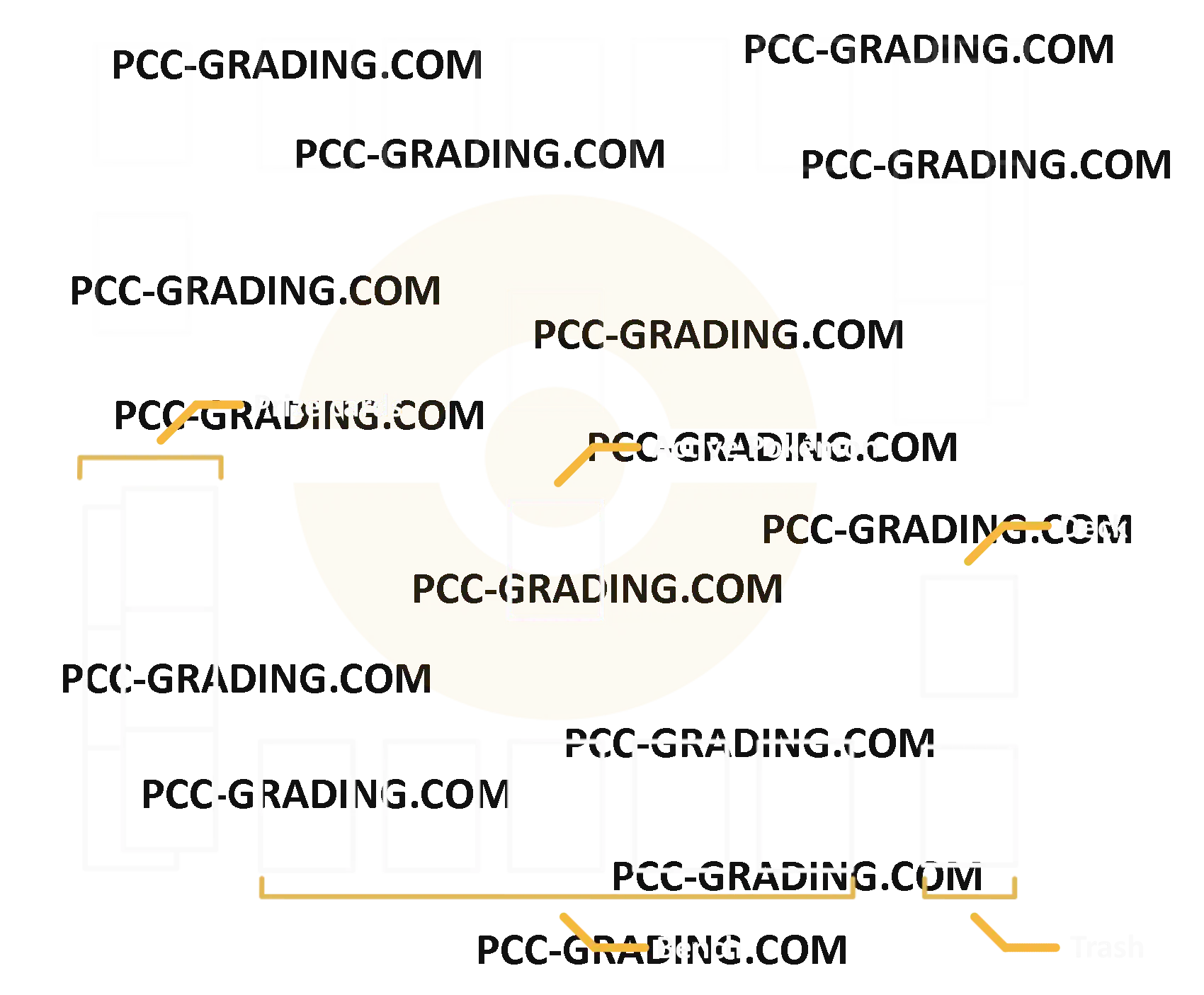
The playing field is divided into several zones:
1. Active Zone: where your active Pokémon, the one fighting, is located.
2. Bench: up to 5 Pokémon can be placed there waiting.
3. Deck: where cards are drawn from.
4. Discard pile: used or knocked-out cards are placed here.
5. Prize Cards: 6 face-down cards to collect after knocking out an opponent’s Pokémon.
6. Hand: the cards you hold to play during your turn.
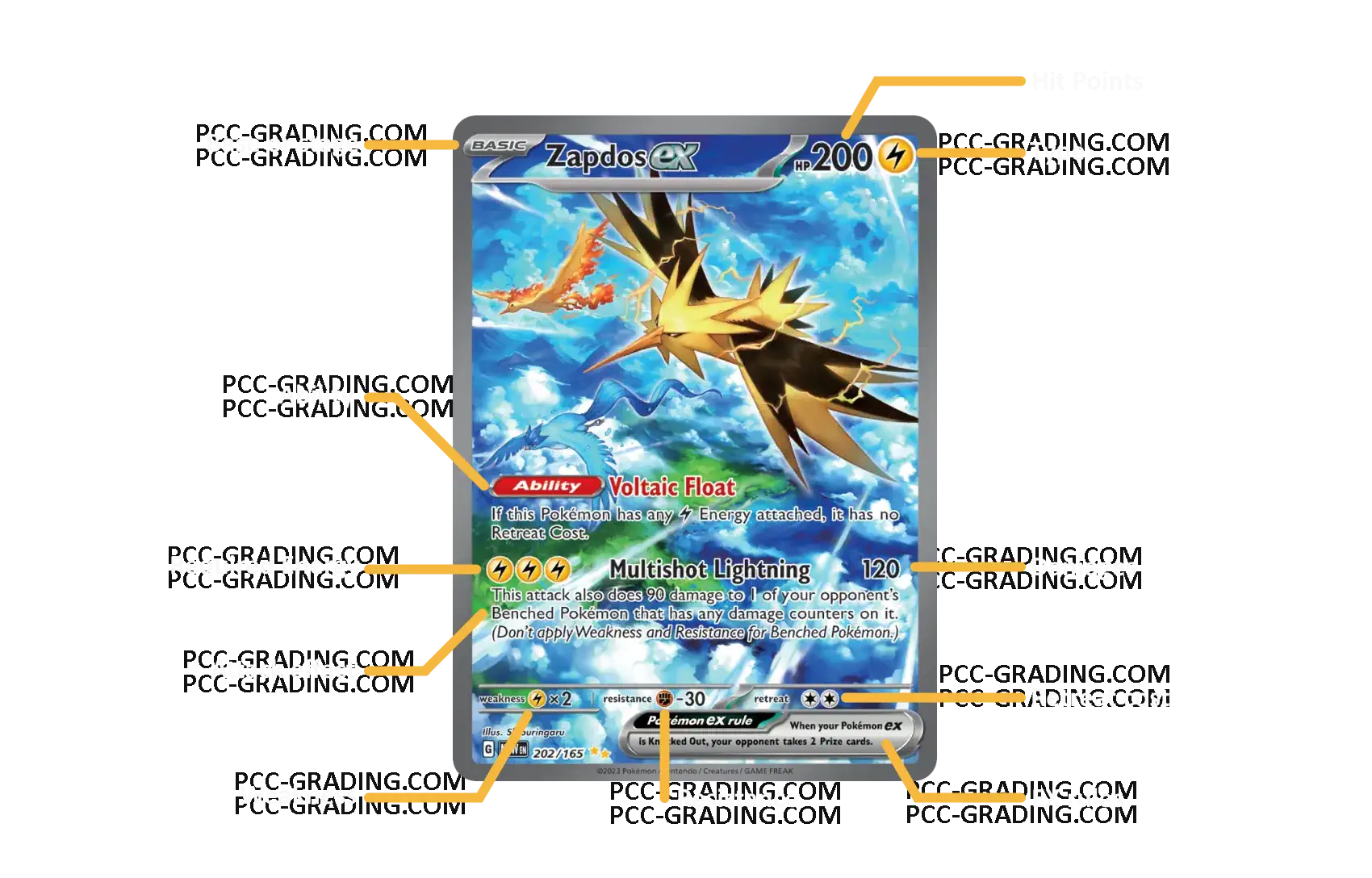
In a Pokémon deck, you will find three main families of cards:
These are your fighters! Here is how a Pokémon card is composed:
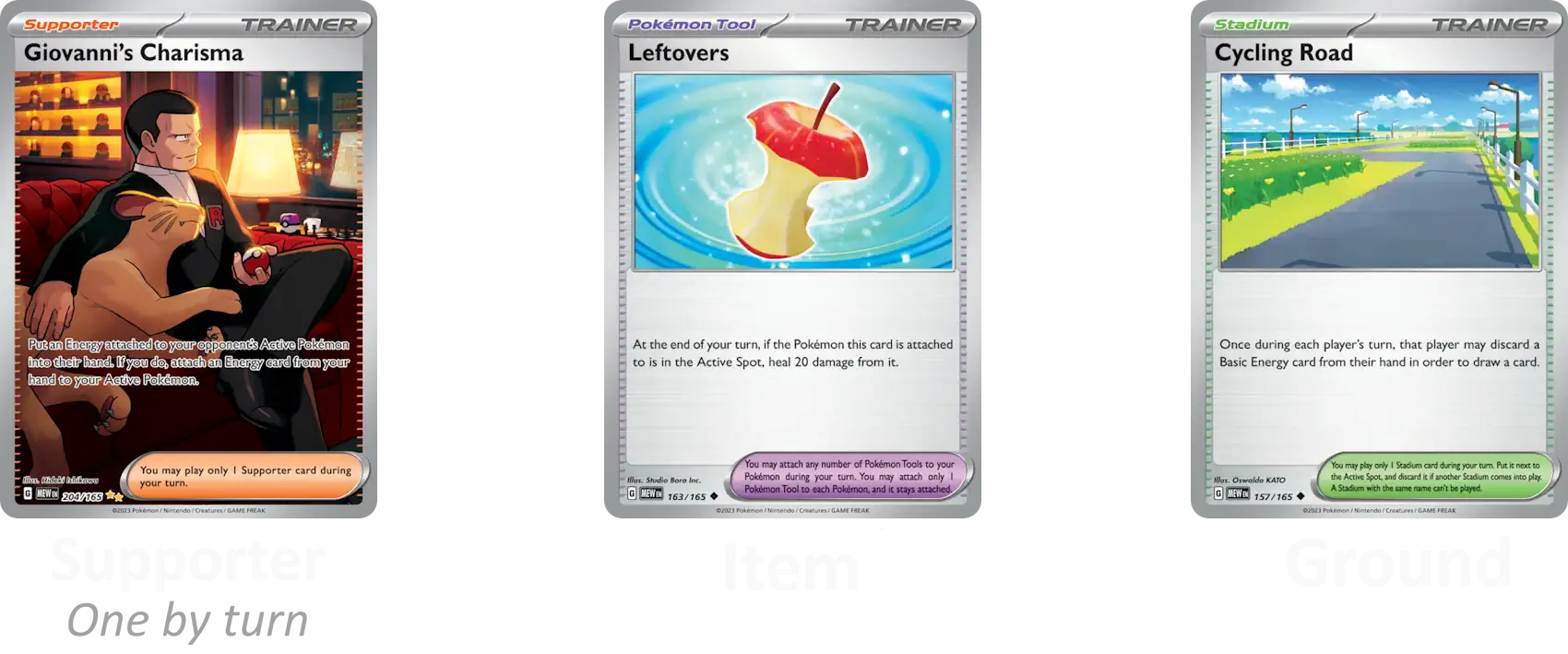
They represent items, supporters, or stadiums. They offer you various effects: draw, heal, search for a card in your deck, or even disrupt the opponent’s game.
There are several subcategories:
• Items
• Supporters (only one per turn)
• Stadiums (change the field rules)
They are essential to attack. Each Pokémon attack has an Energy cost to respect. Once per turn, you can draw an energy card and attach it to one of your Pokémon.
• There are Basic Energies (Fire, Water, Electric, etc.)
• And Special Energies, with particular effects.
Before starting, each player:
1. Shuffles their deck.
2. Draws 7 cards.
3. Places 1 active Pokémon face down (the one fighting) and up to 5 Pokémon on the Bench.
4. Places 6 Prize cards face down.
Once ready, players flip a coin to decide who starts.
Each turn consists of the following phases:
1. Draw: draw a card.
2. Available actions:
• Place Basic Pokémon on the Bench
• Evolve a Pokémon (if it was placed the previous turn)
• Attach 1 Energy card
• Play Trainer cards
• Use special abilities
3. Attack : if your active Pokémon has enough Energy, you can attack.
4. End of turn : attack or Status effects are resolved.
Prize cards are cards you place face down at the start of the game. Each time you knock out an opponent's Pokémon, you take one.
• Each player starts with 6 Prize cards.
You win by taking them all.
If you beat a V, VSTAR, EX or GX Pokémon, you take 2 Prizes
If you beat a VMAX or V-UNION Pokémon you take 3 Prizes
👉 Prize cards add a real strategic dimension: you must manage your attacks to progress without exposing your Pokémon too much.
• Only the Pokémon in the active spot can attack.
• To attack, the number of energy cards required by the attack must be attached to the Pokémon. Energy cards are not discarded when attacking.
• Once a Pokémon is knocked out, the energies attached to it disappear with it.
• To play an Evolution Pokémon, the corresponding basic Pokémon must have been on the bench since the previous turn.
• You can only attach one Energy per turn, unless otherwise stated.
• The Bench can hold up to 5 Pokémon.
Start with preconstructed decks, perfect for learning.
Learn to manage your Energies and your Bench well.
Read each card carefully: their effects are often decisive!
Don't hesitate to try the mobile app Pokémon TCG Pocket. Although the rules are simplified there to make games shorter, it helps to understand the basics in a fun way.
Grading
Company specialized in TCG card grading, we use an advanced tool to evaluate the condition, centering and details of the cards. Guarantee of an accurate and reliable rating to enhance your collections.


