You have control over the cookies used.
 You have control over the cookies used.
PCC-Grading uses cookies to improve your browsing experience and measure site usage. By clicking on "Accept all", you consent to the use of these cookies.
 Back to home
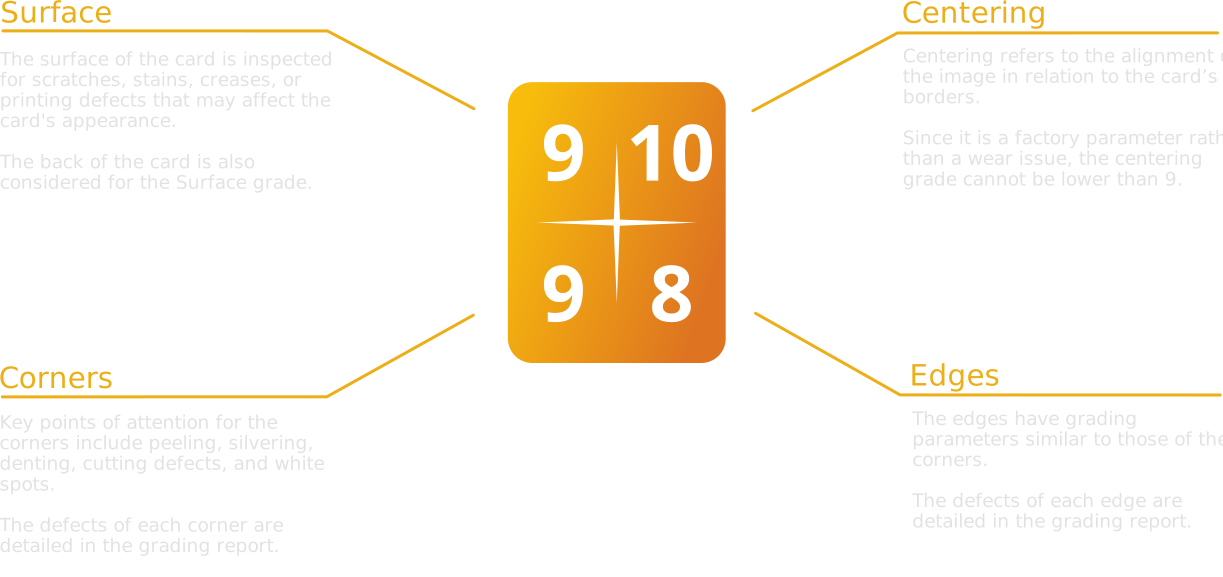


The 10 Star is a prestigious grade, reserved for cards that have received a 10 on all 4 Subgrades.
This means the card shows no signs of wear and has benefited from impeccable manufacturing quality. The card is purely perfect.
The 10 Star is distinguished by a small star at the top right of the grade. These cards are very rare and sought after by collectors, significantly increasing their market value.
A card graded 10 is an exceptional quality card, but slightly below the perfect 10 Star grade. Indeed, one of the four subgrades (Centering, Corners, Edges, Surface) received a 9.5, indicating a very slight manufacturing imperfection, often imperceptible to the naked eye.
A card graded 10 has only a few factory defects. No wear defects are tolerated. Learn more about the factory defect list.
This grade is particularly sought after by collectors, as it guarantees a card in mint condition with remarkable visual qualities, while remaining slightly below absolute perfection.
The 10 Mint grade is thus an ideal compromise for those seeking a high-value card that is still accessible.
A card graded 9.5 is considered “Gem Mint,” meaning it is practically perfect, with only minor barely noticeable imperfections. It is an excellent quality card, very close to perfection, but with tiny details preventing it from reaching a 10 grade.
A card graded 9.5 has several factory defects but no signs of wear. The card is in the same condition as when it left production. Learn more about the factory defect list.
Although not absolutely perfect, a card graded 9.5 is close enough to the top to be perceived as a highly valuable collectible.
A card graded 9 is considered “Mint,” meaning it has no wear defects but includes a multitude of factory imperfections. A Mint card is therefore new, but some small defects from the manufacturing process prevent it from achieving a higher grade like 9.5 or 10.
These imperfections may include slightly off-centering, slightly imperfect corners, edges with small irregularities, or a surface showing a Print Line. Learn more about the factory defect list.
The 9 grade guarantees a card without wear, thus offering high-end quality while acknowledging production variances.
A card graded 8.5 is in excellent overall condition but shows some slight wear defects visible with microscopy tools.
These imperfections may include light scratches, slight color loss, minor chipping, small creases, or subtle dent marks. These wear defects, although present, remain limited and do not significantly affect the card's aesthetics. Learn more about the wear defect list.
The 8.5 grade thus offers a good compromise between quality and accessibility for collectors.
A card graded 8 shows good overall condition but displays moderate signs of wear. These defects are more visible or numerous than on a card graded 8.5, but they do not excessively affect the card's appearance or overall value.
Visible defects may include medium scratches, color loss, or chipping on the edges. Learn more about the wear defect list.
Although these imperfections are visible, they do not significantly alter the card's overall appeal. The 8 grade offers a good compromise for collectors seeking a quality card at an affordable price.
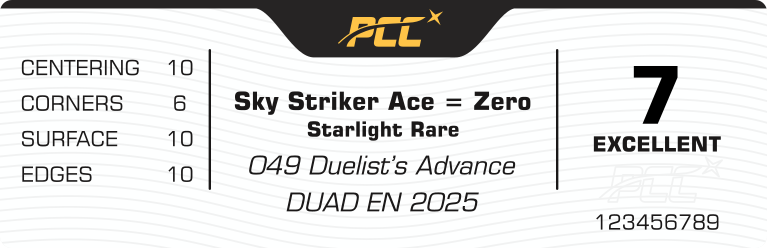
A card graded 7 “Excellent” shows visible signs of wear but retains an acceptable structure and appearance.
These wear defects may include moderately deep scratches, chipping, or pronounced color loss. These combined defects can affect the overall look of the card, but it remains in excellent condition, especially if it is old.
Grade 7 is ideal for collectors who accept a higher level of wear while still seeking a card that remains in good overall condition.
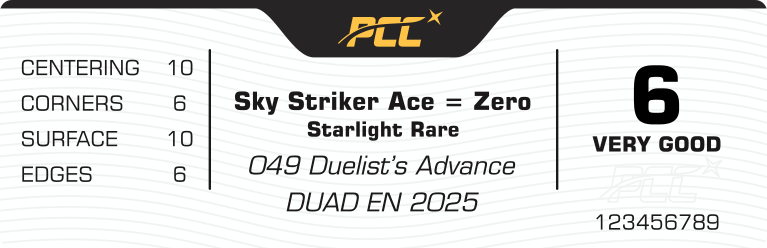
A card graded 6 “Very Good” shows visible signs of wear to the naked eye affecting the overall appearance. Although the card is still in good structural condition, the defects are more pronounced, reducing its visual appeal while keeping it in an acceptable category for collectors.
Wear defects for a card graded 6 include deep scratches, visible color loss, more marked chipping on the edges, as well as some medium creases and dents. Despite these imperfections, the card remains intact and identifiable, retaining its value as a collectible.
Grade 6 is often given to old or rare cards which, despite their wear, retain some importance for collectors due to their history or rarity.
A card graded 5 “Good” shows pronounced signs of wear that significantly affect its appearance. Although the card is still easily recognizable, the defects are widely visible and impact its visual appeal and overall value.
Common wear defects for a card graded 5 include deep surface scratches, extensive color loss, marked edge chipping, as well as visible creases, dents, and peeling. Ink marks or deposits may also be present, contributing to the worn appearance of the card.
This grade is given to cards which, despite significant wear, retain some value for collectors, notably due to their rarity or historical importance. Grade 5 is ideal for those seeking rare pieces without concern for perfect condition.
A card graded 4 “Fair” shows very marked signs of wear, strongly affecting its appearance and structure. Defects are omnipresent and considerably reduce the card’s aesthetic appeal, but it remains recognizable and complete.
Typical defects for a card graded 4 include deep and extensive scratches, significant color loss, pronounced edge chipping, as well as marked creases, deep dents, and visible peeling. Ink marks, deposits, or other alterations may also be present, contributing to the worn look of the card.
Despite these major defects, the card retains value for some collectors, especially if it is rare or historically important. Grade 4 reflects a very worn condition, but the card remains fully identifiable and valuable in certain contexts.
A card graded 3 “Light. Used” shows advanced signs of wear, severely affecting both its appearance and structure. Defects are very pronounced, and the card is damaged, though still recognizable and generally complete.
Wear defects for a card graded 3 may include deep scratches covering a large part of the surface, color loss and severe chipping, as well as widely visible creases, dents, and peeling. The card may also show significant ink marks, deposits, and other major alterations. These combined defects give the card a heavily deteriorated appearance.
At this stage, it is no longer the quality of the card that will grant it prestige, but its history and rarity. That is why we advise opting for authentication rather than grading. The grade on the label will then be A “Authentic”.
A card graded 2 “Used” is in an advanced state of deterioration. It shows significant damage that severely affects both its appearance and structure, making the card hardly attractive to most collectors.
Typical defects of a card graded 2 include very deep scratches, widespread color loss, severe chipping on the edges, as well as multiple creases or marked dents. The card may also show pronounced peeling, ink marks, and significant deposits.
A card graded 2 is generally more appreciated for its history or rarity than for its condition. Therefore, we advise opting for authentication rather than grading. The grade on the label will then be A “Authentic”.
A card graded 1 “Poor” is in an extremely deteriorated state. It shows damage so severe that it almost entirely affects its integrity and appearance. The card is heavily worn, with visible defects everywhere.
Typical defects include deep scratches, widespread color loss, multiple and pronounced creases, severe chipping, significant dents, as well as major peeling and visible ink marks.
A card graded 1 is more intended for collectors looking to complete a collection than for display pieces. Therefore, we advise opting for authentication rather than grading. The grade on the label will then be A “Authentic”.
The grade “A - Authentic” is given to a card whose authenticity has been verified and confirmed, regardless of its overall condition. This means the card has been recognized as an official and legitimate example, without receiving a condition grade.
This grade is requested by the collector when they simply want a guarantee of authenticity without affecting the potential value by a condition evaluation. This grade is useful for cards which, although authentic, may show significant wear defects or alterations.
The “Authentic” grade guarantees the official origin of the card, and is particularly suitable for rare or historical pieces, where authenticity takes precedence over physical condition.
Grading
Company specialized in TCG card grading, we use an advanced tool to evaluate the condition, centering and details of the cards. Guarantee of an accurate and reliable rating to enhance your collections.