You have control over the cookies used.
 You have control over the cookies used.
PCC-Grading uses cookies to improve your browsing experience and measure site usage. By clicking on "Accept all", you consent to the use of these cookies.

 Go back
 6 minutes of reading
For more than 25 years, some cards from the Pokémon TCG have gone from simple toys to collector's items, sometimes auctioned like works of art. Yet not every card follows that path. In this article, we break down the four main reasons a card's price goes up: no reprints, factory errors, supply and demand, and the power of the artwork.
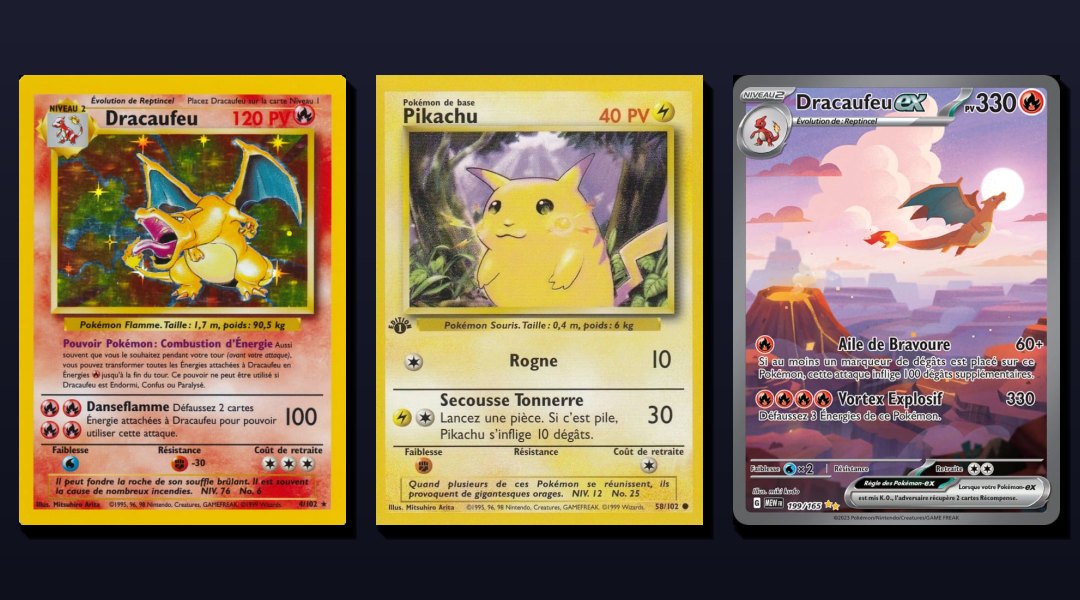
This is the main reason. A Pokémon set is printed for a limited time, then production stops and the publisher moves on to the next series. Booster packs leave the shelves and the number of copies of a card becomes fixed: from then on, it can only go down. Over the years, some cards get played, bent, damaged by humidity or simply lost. Copies in excellent condition become harder and harder to find.
That is exactly what happened to the 1999 Base Set cards. Back then, millions of kids handled them without sleeves, traded them in the playground and stored them in ring binders… The result: a holographic Charizard in mint condition is a rarity today, and its price reflects it.
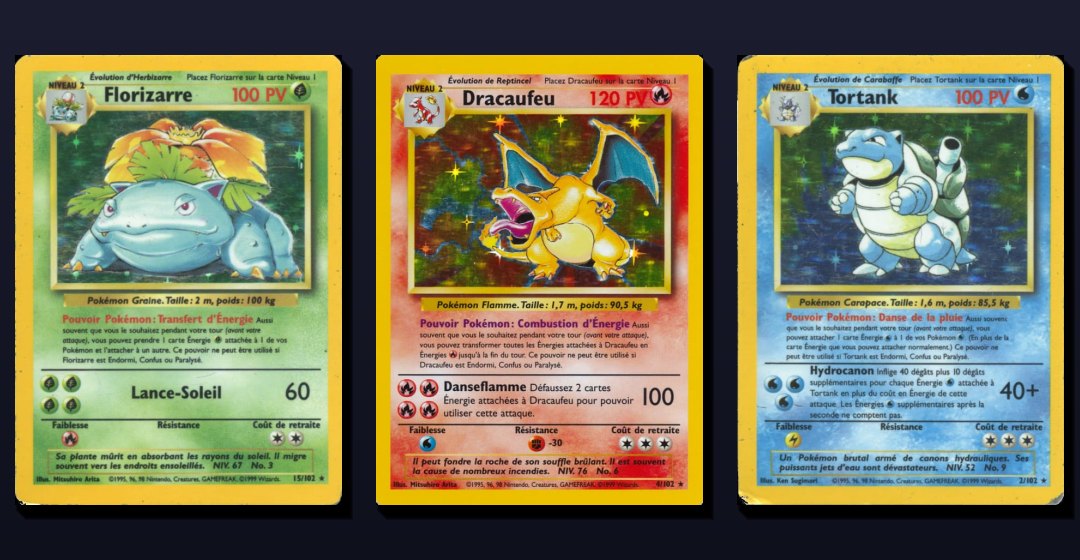
So the question for a collector is simple: how many copies of this card still exist in flawless condition? The fewer there are, the more each copy matters.
Paradoxically, a misprinted card can be worth much more than the "correct" version. When an error is spotted and fixed during production, only the first copies carry it. They become a rare variant, almost a curiosity, that the most passionate collectors absolutely want to own. Here are the most common errors:
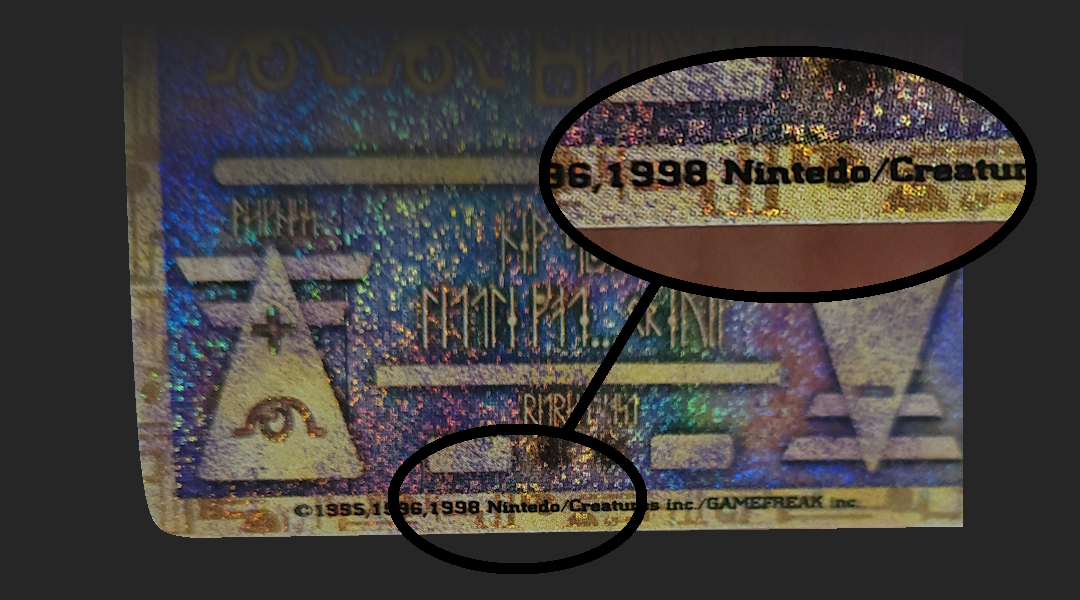
Some errors have become legendary. The "red cheeks" Pikachu from the 1st Edition Base Set, whose cheeks were later recoloured yellow, and the Jungle holo cards printed without their set symbol are wanted by collectors all over the world. The famous Shadowless Charizard is not an error strictly speaking, but it shows the same principle: an early production variant, printed in small numbers, is worth much more than later print runs.
Be careful, though: not every error has value. A card that is simply off-centre or scratched is mostly a card in worse condition. What gives an error its value is that it is known, documented and sought after. And since these cards also attract counterfeiters, having an error authenticated by a grading company remains the best way to prove it is genuine.
A card has no official price. Its value is simply what a buyer is willing to pay at a given moment. Pokémon has nothing to do with it: the price comes from supply (copies listed for sale) meeting demand (collectors looking for it). A very rare card that nobody wants will stay cheap. On the other hand, a fairly common card that thousands of people are actively hunting can reach dizzying heights. The more buyers there are for a card, the more it is worth. Several factors push that demand up:
The most telling example is the Pikachu Illustrator. Influencer Logan Paul had bought the only PSA 10 copy for around 5.3 million dollars. In February 2026, he sold it at auction with Goldin for 16.49 million dollars, a world record certified by Guinness World Records for a trading card. The card had not become any rarer in the meantime: it was competition between a handful of wealthy buyers that tripled its price in less than five years.
The flip side is that prices can also fall. After the 2020-2021 boom, many cards lost part of their value when the hype died down. To follow a card's real market value, the most reliable approach is to look at recent sales on platforms like Cardmarket rather than at sellers' asking prices.
Some cards are no rarer than others, yet they are worth much more. Why? Their artwork. A beautiful card, with an original illustration, a detailed scene or a Pokémon fans adore, is simply more sought after. And since demand sets the price, a well-loved artwork is enough to drive the value up.
The Scarlet & Violet 151 set is a good example. Charizard ex and Zapdos ex both exist as Special Illustration Rares: same rarity, same pull rate in a booster. Yet Charizard sells for several times more. The same goes for the set's Illustration Rares: the starters and Pikachu are far more in demand than less popular Pokémon.
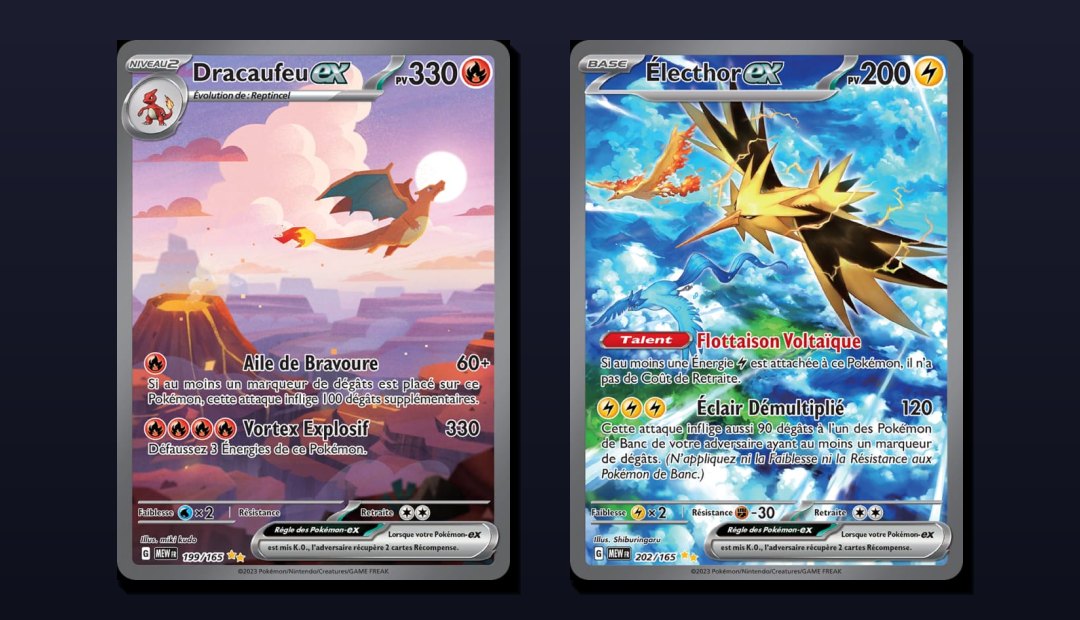
The illustrator's name matters too. Mitsuhiro Arita (the Base Set Charizard and Pikachu), Ken Sugimori (the Base Set Blastoise) or more recent artists like miki kudo (the 151 Charizard ex) have their fans, ready to pay more to complete a collection around a style. Full art cards and illustrations that tell a little story are often the most sought-after in a set.
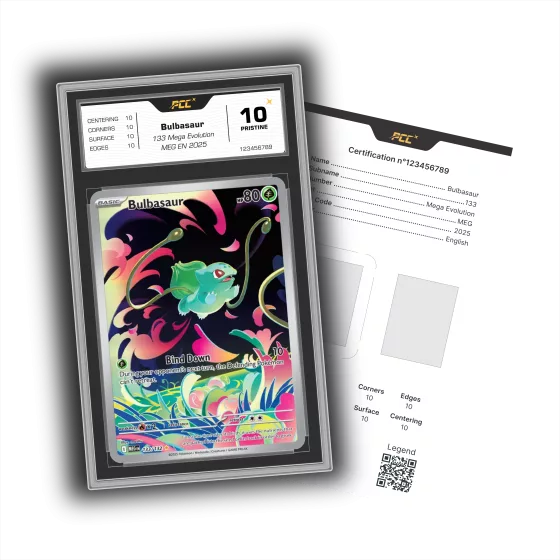
Whatever the reason for its value, a card only reaches its full potential in excellent condition. Centering, corners, edges and surface: the slightest flaw can cut the price in half, or more. That is why a graded card, protected in a sealed slab with an official grade, sells more easily and for more than a raw card. The grade reassures buyers about the card's authenticity and condition. To learn more, read our article why you should grade your cards.
A Pokémon card gains value when its supply shrinks, when it has a rare feature like a factory error, and above all when many collectors are looking for it, whether out of nostalgia, for the Pokémon it shows or for the beauty of its artwork. Nothing is guaranteed, though: the market decides. If you own a card that ticks several of these boxes, grading it is the best way to protect it and have its value recognised.
Grading
Company specialized in TCG card grading, we use an advanced tool to evaluate the condition, centering and details of the cards. Guarantee of an accurate and reliable rating to enhance your collections.